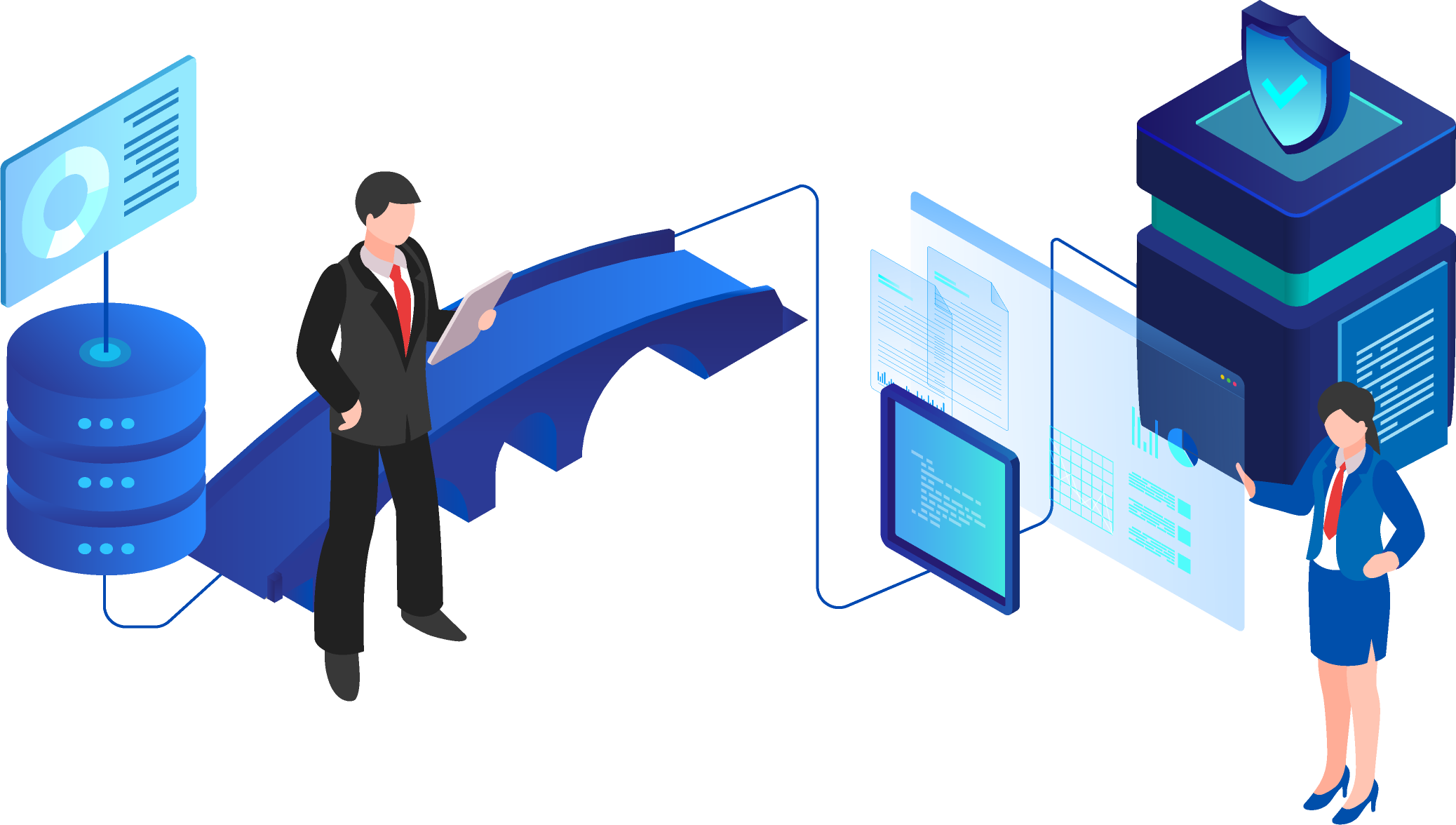
A new era is reshaping the way organizations think about data. While the data warehouse remains the analytical backbone, the concept of the Data Product changes everything about how data is designed, owned, and trusted. The focus is shifting from producing datasets to delivering products as defined, governed, and reliable components of a modern data ecosystem.
The challenge for many organizations lies not in technology, but in clarity. What exactly is a Data Product? How does it differ from the traditional warehouse table or dataset? And most importantly, how do teams ensure that their data products are consistent, governed, and meaningful across domains? The answer lies in architecture, process, and shared understanding.
“The goal is to turn data into information, and information into insight.”
– Carly Fiorina
A Data Product is more than a dataset. It’s a promise. Each product comes with a contract that defines what data is included, what it means, and how it should be used. This contract includes the schema, definitions, quality rules, and policies that govern the data. It creates transparency and accountability, ensuring consumers know what they can rely on.
This idea represents a fundamental shift from the past. In traditional warehouses, IT teams focused on integrating data from source systems as quickly as possible. The business often became an afterthought, consulted only at the end for validation. That approach created inconsistent definitions and duplicated effort across teams. Today, the Data Product model corrects that imbalance by making business ownership central.
Every Data Product should come with a clear and well-understood contract. This isn’t a legal document, but rather a semantic one: a shared definition of what the product delivers, under what conditions, and according to which rules.
Without such contracts, inconsistency creeps in. Consider a simple example, the definition of a Customer. In one domain, “Customer” might mean an active account holder; in another, anyone who has ever interacted with the business. If both versions are published as data products without a shared understanding, downstream analytics will produce conflicting results. The impact is not merely technical, it’s strategic. Decision-makers lose confidence, and trust in the data erodes.
Before building data products, organizations must have the conversation: How important is consistency inside and between domains? This discussion defines the very foundation of a governed, scalable data platform.
“Analytical data provided by the domains must be treated as a product, and the consumers of that data should be treated as customers.”
– martinfowler.com
The bridge between technical delivery and business understanding lies in the logical data model. Logical models express business meaning independently of technology. They are readable by business SMEs and detailed enough for architects to implement accurately. These models define the structure of information, the entities, relationships, and attributes that describe the organization’s reality.
Logical data models become the contract language of the Data Product. They specify the data content and the rules surrounding its use, ensuring consistency and clarity across the enterprise. When used properly, they transform how data products are designed and maintained. Rather than reinventing definitions, teams can reuse patterns, align to enterprise standards, and focus on value.
ER/Studio provides a complete design process for building trustworthy Data Products, starting from the logical model and extending through to the code that powers the warehouse. The process begins in business language, terms and structures that any SME can understand, and then automatically generates the technical implementation. This allows teams to focus on design rather than syntax, bridging the gap between business understanding and physical realization.
ER/Studio’s enterprise approach ensures consistency through reusable design patterns. Common definitions for key concepts. Customer, Order, Product, Account can be shared and reused across models, creating alignment between domains and reducing duplication. When organizations embrace this approach, Data Products become modular, interoperable, and scalable.
In addition, ER/Studio integrates directly with business glossaries and data governance tools such as Microsoft Purview and Collibra. This integration links data design with governance, ensuring that every product’s meaning, ownership, and policy are documented and traceable. The result is not just good data architecture, it’s a living, governed ecosystem.
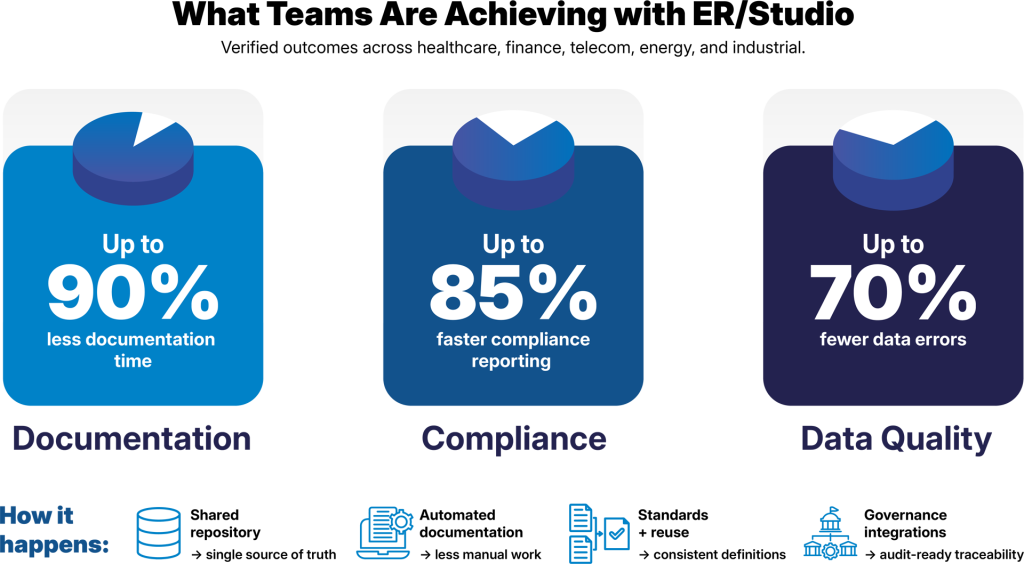
A successful modern data platform depends on more than pipelines and technology stacks. It depends on architecture, collaboration, and semantics. Logical models, governance integration, and reusable design patterns create the bridge from the Data Warehouse to the Data Product era.
Organizations that invest in this bridge gain consistency, trust, and agility. They can assemble new data products quickly, knowing that definitions, rules, and governance policies are already aligned. They can scale their analytics confidently, avoiding the chaos of inconsistent meaning and duplicated effort.
In this world, the role of the architect is not to enforce constraints but to enable clarity, to build the frameworks that make consistency possible and evolution effortless.
Transform your data strategy from fragmented assets to unified, governed Data Products.
Book a Demo today to see how ER/Studio helps define, design, and deliver trusted data.
A Data Product contract defines what data is provided, what it means, and the rules governing its use. It ensures shared understanding and accountability between producers and consumers.
Without consistent definitions, organizations lose trust in their data. Consistency ensures that “Customer,” “Order,” and other entities mean the same thing everywhere they’re used.
Logical models define information in business terms, serving as the shared blueprint for both governance and implementation.
Reusable patterns accelerate delivery, enforce best practices, and ensure enterprise-wide consistency. They are the foundation for scalable, sustainable architecture.
ER/Studio connects logical models to implementation, ensuring consistency, governance alignment, and reusability — all essential for defining reliable Data Products.