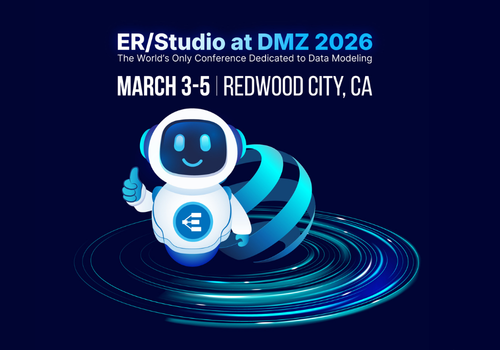
Every successful data initiative relies on one thing: clear, shared meaning. Data modeling is how teams capture that meaning, shape it into structure, and carry it forward as systems evolve. It is both a technical discipline and a collaborative craft.
Data Modeling Zone (DMZ) 2026 brings that craft into focus. As the only global conference dedicated entirely to data modeling, DMZ convenes practitioners who want to sharpen their skills, exchange ideas, and explore how strong models support modern data programs.
ER/Studio is excited to sponsor and attend DMZ 2026 and to engage with a community that takes the practice seriously. For anyone working in data architecture, governance, analytics, or AI, DMZ offers focused learning with immediate impact.
DMZ works because it is intentionally focused. Instead of spreading attention across dozens of unrelated topics, the conference goes deep on one discipline and explores it from multiple angles: modeling skills, advanced case studies, strategy and certification, semantics and AI, and communication.
That range matters because modern modeling work is rarely only technical. It also includes how teams align on definitions, how they communicate design intent, and how they keep models useful as systems change. DMZ reflects that reality with five workshops:
Over 50 sessions and workshops are delivered by speakers from more than ten countries, bringing a wide range of experience and industry perspective. The result is a program that feels cohesive and practical, with a strong emphasis on real-world applicability.
DMZ’s workshop format is a major reason to attend. Workshops create space to practice techniques, compare approaches, and make design decisions in real time, with direct access to experienced instructors who can answer questions and refine thinking on the spot.
DMZ opens with a full day of conference workshops offering focused, hands-on learning across multiple subject areas.
For those strengthening fundamentals, Data Modeling Fundamentals with Steve Hoberman reinforces core principles that scale into real production environments. Conceptual Modeling with Kasi Anderson focuses on capturing business meaning early and translating it into structures teams can build on confidently.
For more advanced practitioners, Value-Added Data Modeling with Larry Burns connects modeling decisions to business outcomes, positioning modeling as an intentional practice that reduces ambiguity and improves delivery quality.
DMZ also reflects how modeling is evolving across platforms. JP Dijcks’ session on shape-shifting between JSON and SQL with transactional consistency addresses the realities of hybrid architectures, where teams must model across relational and semi-structured data while maintaining clarity and performance.
Professional development is supported through CDMP Awareness Workshop and Exam options led by Marilú López Flores, linking modeling practice to broader data management standards.
The workshop program also includes sessions that expand how practitioners think and communicate. Sessions such as Using AI as a Creative Writing Partner and communication-focused workshops often deliver practical gains, especially for teams navigating stakeholder alignment and explanation of modeling decisions.
DMZ’s program supports practitioners across levels of maturity, from fundamentals to advanced implementation.
These sessions reinforce core principles and conceptual clarity. Talks such as Principles of Data Value Delivery and Data Models on a Shoestring provide practical guidance for delivering value under real-world constraints.
This area showcases modeling under pressure. Sessions like MongoDB Data Modeling, Amazon DynamoDB Data Modeling, and Copilot-Driven Data Modeling in Databricks illustrate how patterns adapt across platforms and architectural styles.
These sessions connect modeling to governance, data maturity, and measurable business value. Topics such as Operationalizing Data Maturity and updates on DAMA-DMBOK 3.0 highlight modeling’s role in consistent execution at scale.
AI, analytics, and governance depend on stable meaning. Sessions including Data Modeling Through the AI Lifecycle and AI Agents at Work explore how semantics and modeling support responsible AI adoption.
Communication is treated as a core modeling skill. Sessions like The Data Modeling Pitch, Working Through Conflict, and Show It or Tell It? focus on making modeling work clear, defensible, and actionable across teams.
View the full itinerary.
The value of DMZ is not only the agenda. It is the setting: several days surrounded by professionals who share a discipline and are actively improving it.
In-person interaction accelerates learning in ways that are hard to replicate remotely. You can ask follow-up questions immediately, work through examples in real time, and pressure-test ideas with peers who understand the tradeoffs. You can compare modeling approaches across industries, discover how others enforce standards, and learn how teams maintain logical models and semantic alignment over time.
Networking at DMZ is intentional and highly relevant. Because the conference is focused entirely on data modeling, conversations start with shared understanding rather than surface-level introductions. Attendees quickly move into meaningful exchanges about real challenges, from managing definition drift and aligning models with governance programs to supporting AI initiatives through strong semantics and keeping models useful long after implementation.
DMZ also creates space for relationships to form beyond the session rooms. Structured networking experiences, including the Casino Night evening event, encourage informal discussion and connection. These moments often lead to ongoing collaboration, idea sharing, and professional relationships that extend well beyond the conference itself.
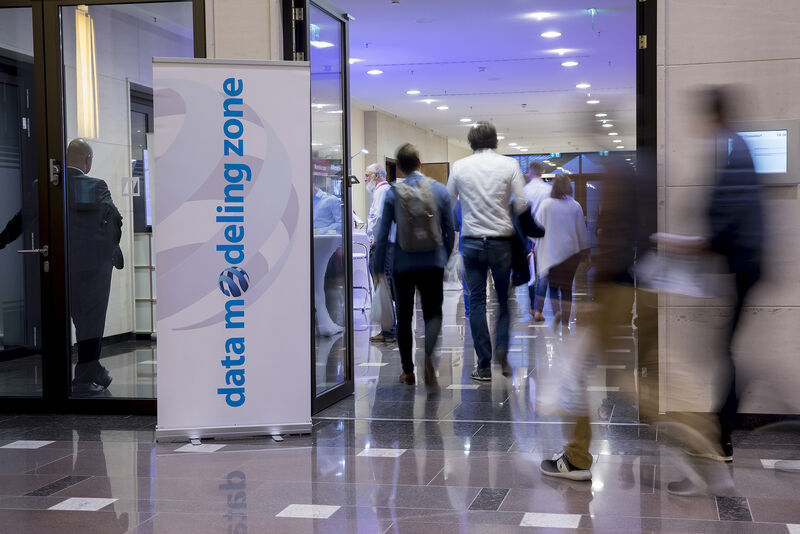
ER/Studio will be onsite throughout DMZ 2026, and attendees are encouraged to meet directly with the team during the event.
You will be able to connect with:
If you want to discuss enterprise data architecture, logical modeling, governance alignment, or how modeling supports AI readiness, you can schedule time or simply connect during the conference. This is also a great chance to share what you are working on and ask practical questions about how ER/Studio supports modern data programs.
The Meaning of Life: Ontologies, Data Models, and Semantic Guardrails for AI
Thursday, March 5 | 10:15 to 11:15 AM
Presenter: Jamie Knowles, Product Director, ER/Studio
This session is designed for teams navigating the intersection of data modeling and AI adoption. As AI becomes an active participant in analytics and decision making, clarity and consistency of meaning become operational requirements. When definitions vary across systems, teams, or time, AI systems can produce answers that look confident but are difficult to validate and inconsistent across contexts.
Jamie’s session addresses how organizations create semantic stability through business-driven logical models, enterprise data models, and ontologies. It explores how logical models can anchor medallion architectures, how enterprise ontologies can serve as semantic guardrails, and how these practices support BI, analytics, and AI as integrated outcomes rather than separate initiatives.
Attendees should expect practical framing, not abstract theory. The focus is on how to design meaning deliberately, how to keep semantics governed, and how to make these assets usable across teams.
Rush for Relational Riches: The Gold Prospecting Challenge
Thursday, March 5 | 1:30 to 5:00 PM
This workshop is built around a realistic modeling scenario that reflects the complexity many teams face. Participants work in teams to build a logical data model for a complex business system, addressing requirements that span operations, compliance, and analytics.
This is exactly where modeling discipline becomes visible. Teams must decide how to structure concepts, how to manage ambiguity, how to handle competing requirements, and how to create a model that stays usable as the system evolves.
The workshop includes the use of industry data modeling tools, including ER/Studio, and explores how Generative AI can assist the modeling process. The value here is not only the final model. It is the decision-making process, the peer discussion, and the exposure to how other practitioners think.
DMZ 2026 will take place at the Oracle Conference Center. The venue is conveniently situated near San Francisco and easily accessible from San Francisco International Airport, Oakland International Airport, and San Jose Mineta International Airport.
If you plan to attend, ER/Studio is offering a registration discount.
Use code ERSTUDIO26 to save 25% on DMZ registration, including conference and workshop passes. DMZ pricing increases as tickets sell, so earlier registration typically offers the best pricing.
DMZ is valuable for individuals, but it can be especially impactful for teams. When multiple people from the same organization attend, they return with shared language, shared techniques, and a stronger ability to apply improvements consistently. The conference also supports team development through workshops, hands-on modeling exercises, and exposure to diverse approaches across industries.
If your team is working on data governance, standardizing definitions, building data products, or preparing semantic foundations for AI, DMZ offers concentrated learning that can accelerate progress and reduce rework.
ER/Studio is excited to participate in DMZ 2026 and engage with a community that takes data modeling seriously. If you want to deepen your modeling skills, learn from experienced instructors, and connect with peers who are solving similar problems, DMZ is the right place to do it.
If you want to meet with the ER/Studio team at the event, reach out at [email protected] or through our contact form so we can connect you with the right team members onsite.
We look forward to seeing you there!




