Modern data platforms are exceptionally good at moving, storing, and transforming data. Yet many organizations continue to struggle with inconsistent definitions, metric drift, fragmented domain models, and AI-generated insights that lack business context.
As AI becomes an active participant in analytics and decision-making, meaning is no longer optional. Without a shared understanding of business concepts, organizations risk creating semantic entropy—an environment where definitions diverge, trust declines, and AI systems generate inconsistent outcomes.
While organizations have invested heavily in data movement and automation, far less attention has been paid to preserving meaning. The challenge facing modern data programs is no longer getting data into warehouses, lakehouses, or data products. The challenge is ensuring that business meaning remains consistent as data moves across platforms, domains, and teams.
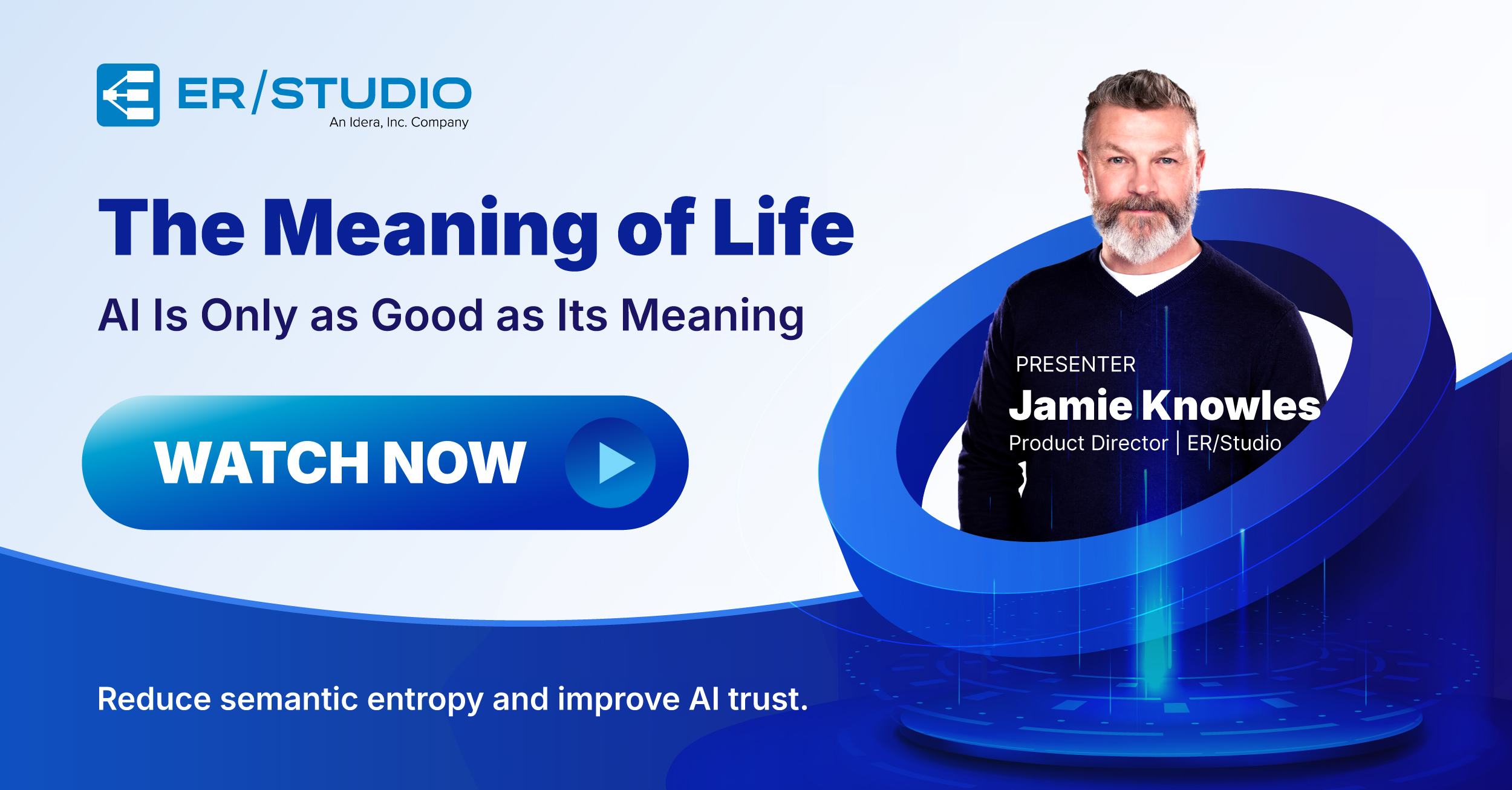
In this recorded session, Jamie Knowles explores why business-driven logical models, enterprise data models, and ontologies are becoming critical assets for AI-ready organizations. You’ll learn how logical models provide a shared contract between business, engineering, and governance teams, how enterprise models support consistency across domains, and how semantic guardrails help improve trust in analytics, reporting, and AI outcomes.
This session also explores how modern data product strategies, medallion architectures, and enterprise semantic models work together to create reusable business meaning that can be leveraged across analytics, governance, BI, and AI initiatives.
This on-demand webinar is designed for data architects, enterprise architects, data modelers, data governance leaders, analytics leaders, data engineers, business data owners, AI stakeholders, and anyone responsible for establishing trusted foundations for analytics, reporting, data products, and AI initiatives.
Director of Product, IDERA
Watch this recorded session to learn how enterprise data models, logical models, and ontologies help organizations preserve meaning, improve consistency, and establish trusted foundations for AI, analytics, and modern data products.
This webinar explores why meaning has become a critical challenge in modern analytics and AI initiatives. It explains how logical models, enterprise data models, and ontologies help organizations create semantic guardrails that improve trust, consistency, and confidence in AI-generated outcomes.
Semantic entropy occurs when business definitions, metrics, and concepts gradually drift apart across systems, domains, and teams. This can lead to inconsistent reporting, conflicting interpretations of data, and unreliable AI outcomes.
AI systems rely on business context and shared meaning to generate trustworthy insights. Enterprise data models provide a structured representation of business concepts that helps ensure consistency across analytics, reporting, governance, and AI applications.
Semantic guardrails are structures that help maintain consistent business meaning across systems and technologies. Logical models, business glossaries, ontologies, and semantic layers can all serve as guardrails that improve trust in analytics and AI outcomes.
Ontologies extend the work that data modelers already perform by representing business concepts, relationships, and constraints in a machine-readable format. They help AI and analytics systems understand business meaning more consistently.
Logical models create a shared understanding of business concepts before physical implementation occurs. They help ensure that data products, medallion architectures, and analytics platforms remain aligned to common business definitions.
This session is valuable for data architects, data modelers, governance professionals, enterprise architects, analytics leaders, data engineers, AI stakeholders, and organizations looking to improve trust in analytics and AI-driven decision-making.
Connect with our team to learn how ER/Studio helps organizations design, govern, and reuse business meaning through logical modeling, enterprise architecture, metadata management, semantic layers, and AI-ready data foundations.