Modern data applications are changing how organizations deliver information and intelligence to employees, customers, and automated systems.
AI assistants, customer-facing analytics, operational intelligence platforms, and real-time decisioning systems all depend on fast access to reliable enterprise data. As these applications become more sophisticated, the architecture behind them must support increasing data volumes, distributed environments, complex integrations, and demanding performance requirements.
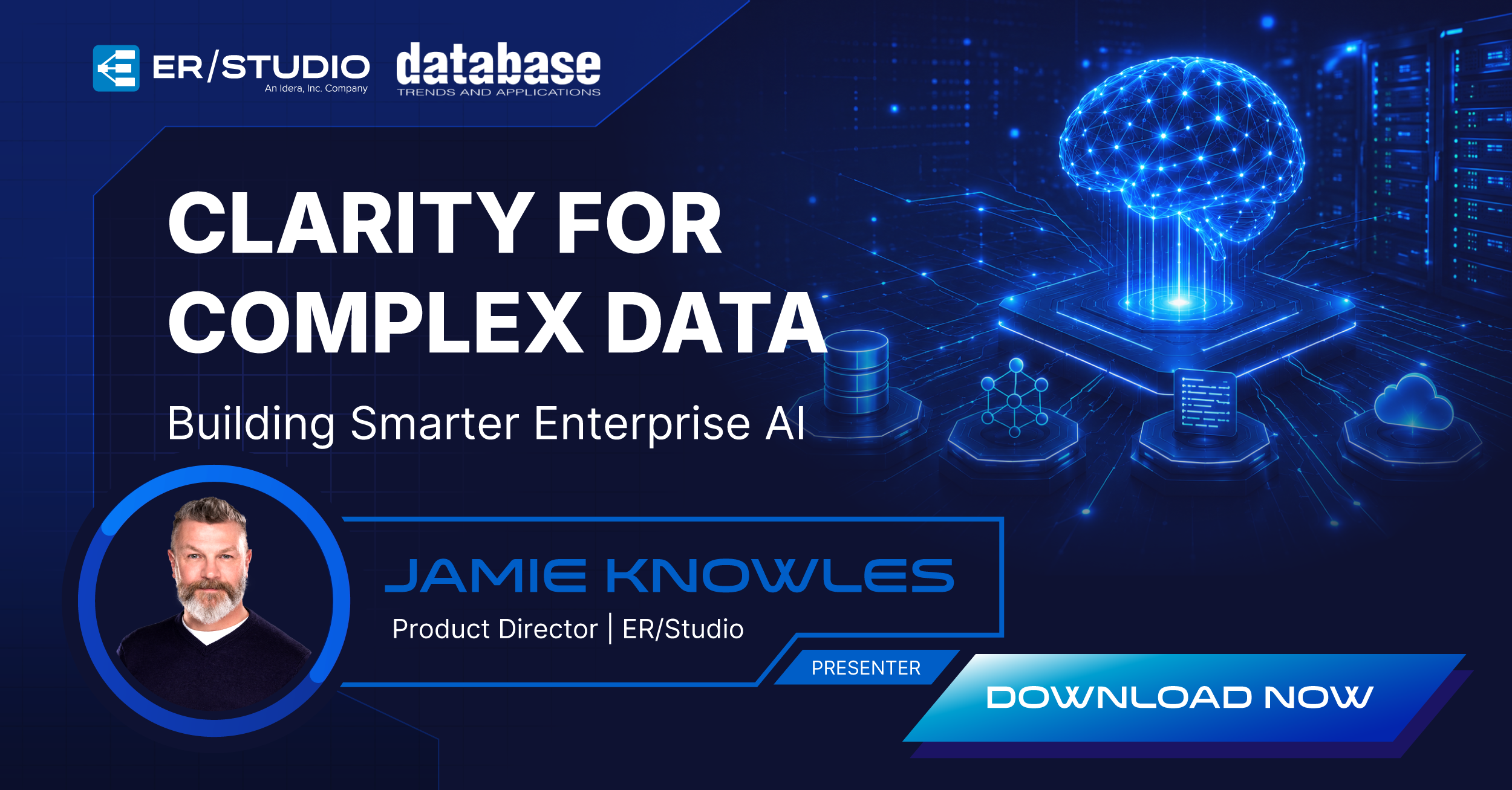
In this on-demand webinar, Jamie Knowles joins a panel of industry experts to explore the technologies, architectures, and practices behind successful modern data applications.
The discussion examines how organizations can build scalable architectures, support real-time and AI-powered experiences, simplify data integration across distributed environments, and maintain performance, security, governance, and trust as applications grow.
For data teams, the challenge is not simply moving information faster. It is building an architecture that allows applications to use data quickly while maintaining the structure, reliability, context, and controls required for enterprise use.
This on-demand webinar is designed for data architects, enterprise architects, application architects, data engineers, AI and analytics leaders, data governance professionals, metadata managers, database professionals, data platform teams, and technology leaders responsible for developing or supporting modern data applications.
Jamie Knowles
Product Director, ER/Studio
Additional DBTA Panelists
TBD
Watch this recorded roundtable to explore how organizations are designing data architectures that support fast, scalable, real-time, and AI-powered applications without sacrificing reliability or trust.
Modern data applications use enterprise data to deliver experiences such as AI assistance, operational intelligence, customer-facing analytics, real-time recommendations, and automated or data-driven decisioning.
Applications depend on the systems that integrate, organize, process, and deliver their underlying data. Architecture decisions can affect scalability, performance, reliability, security, and the ability to support new use cases.
Many operational and AI-powered applications rely on current information to provide useful responses or support timely decisions. This places additional demands on integration, processing, reliability, and application architecture.
Governance helps organizations understand definitions, ownership, policies, and appropriate use of enterprise data. These practices can help teams maintain consistency and trust as more applications rely on shared data.
AI-powered experiences depend on the quality and reliability of the information available to them. Inaccurate, poorly understood, or inadequately governed data can reduce confidence in application outputs.
This session is relevant to data architects, application architects, data engineers, governance professionals, AI leaders, analytics teams, and technology executives responsible for modern application or data platform initiatives.
Explore ER/Studio resources or connect with the ER/Studio team to discuss data modeling, metadata, governance, and modern data architecture requirements.
Connect with our team to explore how ER/Studio can help support data modeling, metadata management, governance, and modern data architecture initiatives.