Enterprise data governance tools help organizations manage data quality, enforce policies, maintain compliance, and track data lineage across complex multi-source environments.
These platforms create unified frameworks for data ownership, access control, metadata management, and regulatory compliance.
Organizations face distributed data architectures, expanding regulatory requirements, and the need for self-service analytics without compromising control. The challenge isn’t just technical. Most governance initiatives fail because they try to enforce policies before establishing the architectural foundation that makes those policies enforceable. You can’t govern what you haven’t properly modeled.
This guide examines five leading platforms:
Data governance at enterprise scale requires more than spreadsheets and manual processes. The reality is harsher: most organizations managing hundreds of data sources don’t actually know what data they have, where it lives, or who owns it.
They discover these gaps during audits or after incidents. According to DAMA International, enterprise data governance establishes the authority, control, and shared decision-making needed to manage data as a formal organizational asset.
Common problems that drive platform adoption:
ER/Studio Enterprise provides the architectural foundation by documenting data structures, relationships, and business rules across your entire data landscape. This documentation becomes the single source of truth that other governance processes rely on. Without accurate models, governance policies have nothing solid to enforce against.
Modern governance platforms operate as data intelligence hubs, discovering metadata automatically, classifying sensitive information, and enforcing access policies without requiring manual intervention for every data element. The ROI shows up through reduced time spent searching for data, fewer quality issues affecting business outcomes, simplified audit preparation, and controlled self-service that reduces burden on central IT teams. Plan on 12-18 months before you see meaningful ROI. Anyone promising faster results hasn’t implemented one of these systems at scale.
Enterprise data governance platforms must deliver specific capabilities to handle modern data environment complexity. When evaluating platforms, assess these fundamentals. Note that most vendors will claim they do all of this. They don’t. Look for actual implementations, not roadmap promises.
Metadata management forms the foundation, requiring platforms to discover, import, and maintain metadata from diverse sources including databases, data warehouses, cloud storage, BI tools, and custom applications. Industry leaders connect metadata capabilities directly to data sources, extract structural metadata, and maintain bidirectional synchronization so changes in systems reflect in your governance layer. Bidirectional matters because most platforms only pull metadata in. When you need to push changes back to databases, you discover which platforms actually support round-trip engineering. The W3C defines metadata as structured information used to describe, explain, and make data assets easier to retrieve, use, and manage across systems.
Data cataloging makes metadata accessible and useful through:
Policy enforcement separates enterprise platforms from documentation tools. Policies covering data classification, access control, retention, and quality execute automatically. When a column gets classified as personally identifiable information, access policies apply immediately without human intervention. In practice, you’ll spend months defining what “automatic enforcement” actually means in your environment. Every organization has edge cases.
Stewardship workflows coordinate human oversight with automated processes. Data stewards need tools to review changes, resolve quality issues, manage glossary terms, and handle access requests.Look for software that supports distributed stewardship models where domain experts own their data. The distributed model sounds great until you realize you need to train those domain experts. Budget time and resources for ongoing steward training, not just platform training.
Quality monitoring integrates data profiling, rule execution, and exception management by assessing quality continuously, tracking metrics over time, and routing problems to appropriate stewards with context needed for resolution. The hard part isn’t measuring quality. It’s getting teams to actually fix the issues the system identifies.
Regulatory compliance features map governance processes to specific requirements like GDPR’s processing activity documentation and consent management, CCPA’s disclosure and deletion capabilities, and industry regulations like HIPAA, SOX, and PCI-DSS. Vendors will tell you their platform “supports” these regulations. What they mean is they provide fields where you can document your compliance. The actual compliance work is still on you. The European Commission makes clear that GDPR compliance requires demonstrable documentation of processing activities, ownership, and controls—not just policy statements.
Five platforms represent different approaches to enterprise data governance, each with distinct strengths for specific organizational needs. Understanding how they differ helps organizations select the right fit for their environment.

ER/Studio combines enterprise data modeling, metadata management, data dictionary capabilities, and governance workflows in a unified environment.
Organizations use the platform to document data architectures, maintain consistency across systems, and establish governance frameworks grounded in accurate models of their data landscape. This matters because governance without architectural grounding becomes a documentation exercise that falls out of date the moment systems change.
Deployment and collaboration: The platform supports both cloud and on-premise deployments, giving organizations flexibility based on data sovereignty and security requirements. Multi-user collaboration features support distributed teams working on shared models through the centralized Repository, which provides version control, real-time collaboration, and an enterprise data dictionary for reusing assets across projects. Real-time collaboration means multiple modelers can work on the same logical model without stepping on each other. If you’ve ever tried merging data model changes in version control, you know why this matters.
Integration ecosystem: ER/Studio connects directly with Microsoft Purview and Collibra to automate metadata synchronization, making data models instantly available in enterprise catalogs. The platform handles reverse engineering from databases, NoSQL systems, and file formats, while Safyr integration extracts metadata from complex ERP and CRM systems like SAP and Salesforce. SAP extraction isn’t trivial. SAP’s data model has over 90,000 tables in some implementations. Safyr handles the complexity of figuring out which tables actually matter for your use case.
Modern architecture support: The platform supports Data Vault, Data Mesh, and Lakehouse architectures, delivering structure and control without limiting innovation. Cross-platform capabilities mean teams can govern heterogeneous environments from a single platform rather than maintaining separate tools for each database. In practice, this means you model once and generate DDL for Oracle, SQL Server, PostgreSQL, Snowflake, or whatever database platform your organization uses. No manual translation between database dialects.
Best for: Organizations where data architecture complexity demands tight integration between modeling and governance, regulated industries requiring detailed documentation, and teams migrating from SAP PowerDesigner who need direct model import and stronger governance capabilities. PowerDesigner went end-of-life, leaving thousands of organizations with models they need to migrate. ER/Studio imports PowerDesigner models directly, preserving years of modeling work.
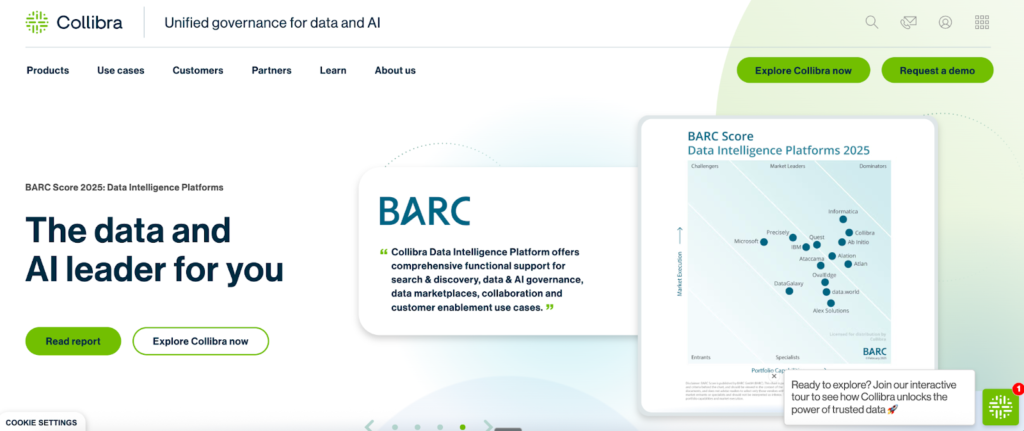
Collibra emphasizes business user engagement through intuitive interfaces for data discovery, glossary management, and stewardship activities.
The platform’s workflow engine supports complex approval processes and cross-functional collaboration. Collibra sells governance as a business process problem, not a technical architecture problem. This works well if your business stakeholders are ready to own data stewardship. Most aren’t.
Governance approach: Collibra treats data governance as a business discipline first, building features around data stewards, business glossaries, and policy management. The platform excels at creating shared understanding of data across business and technical teams. Implementation estimates assume you already have data stewards trained and a governance framework defined. Most organizations have neither, which is why implementations often run longer than planned.
Deployment model: Available primarily as cloud-based SaaS, reducing infrastructure management and providing automatic updates.
Best for: Organizations prioritizing business user adoption and stewardship process maturity, enterprises with established data governance programs looking for sophisticated workflow capabilities, and companies wanting a governance platform that business stakeholders will actually use. You need organizational buy-in before you buy Collibra. The platform won’t create your governance culture for you.
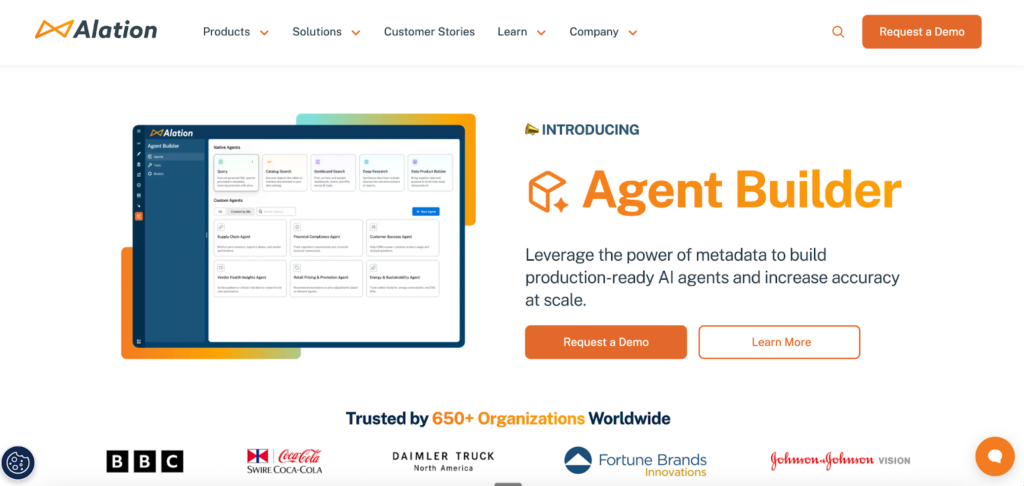
Alation differentiates through machine learning that learns from user interactions to surface relevant data assets and suggest content.
The platform’s query analysis capabilities provide insights into how data gets used, helping organizations prioritize governance efforts based on actual consumption patterns. The behavioral analytics work well in environments where you already have active data users. If nobody’s using your data warehouse yet, there’s no behavior to learn from.
Catalog intelligence: The platform builds a “data health” score for assets based on usage, documentation quality, and user endorsements. This crowdsourced approach helps users identify trustworthy data sources. In theory. In practice, popularity doesn’t always equal accuracy. Your most-used table might be wrong, but everyone uses it because that’s what they’ve always used.
Deployment model: Available as cloud SaaS or on-premise, with cloud becoming the preferred deployment for new customers.
Best for: Organizations prioritizing data democratization and self-service analytics, companies with strong analyst populations who will benefit from query-based discovery, and teams wanting to encourage data exploration while maintaining governance controls. Alation works best when you’re solving for data discovery, not data modeling or architectural governance.
Informatica delivers governance as part of a broader intelligent data management platform.
Organizations already using Informatica’s data integration tools benefit from native integration across the product portfolio, with metadata flowing automatically between data quality, master data management, and governance functions. This tight integration is both the strength and the lock-in. Moving off Informatica once you’re in the ecosystem is expensive.
Scale capabilities: The platform handles massive metadata volumes and complex enterprise architectures, with proven deployments managing millions of data assets across global organizations. Proven means large financial services and pharmaceutical companies run Informatica at scale. It also means expect enterprise software pricing and implementation timelines measured in quarters, not months.
Deployment model: Available in cloud, on-premise, and hybrid configurations, with cloud-native architecture for new deployments.
Best for: Large enterprises with mature data management practices, organizations with significant existing Informatica investment, and companies needing integrated data quality and MDM alongside governance. If you’re already running Informatica PowerCenter or Data Quality, adding the governance components makes sense. If you’re starting from scratch, evaluate whether you need the entire Informatica stack or just governance.
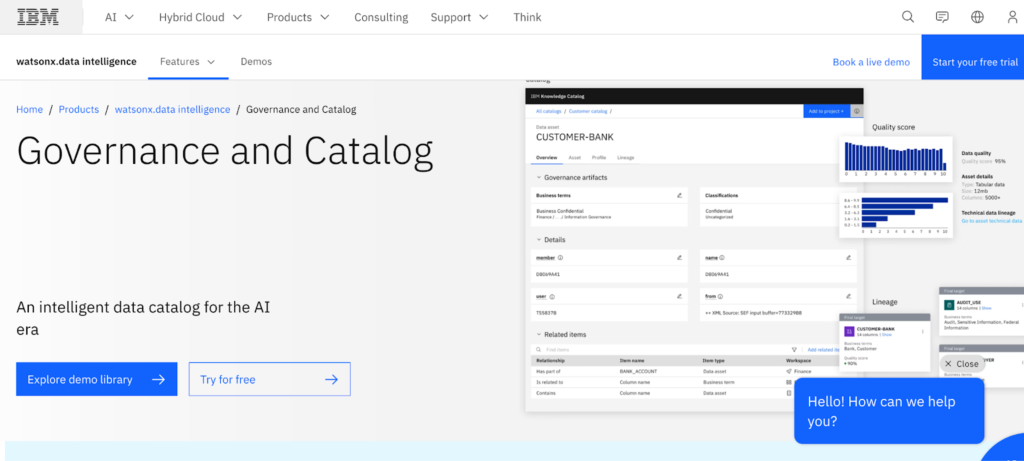
IBM emphasizes data privacy, risk assessment, and regulatory reporting as core governance capabilities.
The Knowledge Catalog integrates with IBM’s broader data and AI platform, including Watson capabilities for data profiling and quality assessment. Watson sounds impressive in demos. In production, you’ll spend time training the AI on your specific data patterns and terminology.
Compliance focus: Built-in frameworks for GDPR, CCPA, and industry-specific regulations make compliance mapping simpler. The platform includes advanced data privacy features like automated PII detection and consent management. Automated PII detection works well for obvious patterns like Social Security numbers and credit cards. Less obvious PII like internal employee IDs or customer reference numbers still require manual classification.
Deployment model: Available as part of IBM Cloud Pak for Data, supporting deployment on multiple clouds and on-premise through Red Hat OpenShift. Cloud Pak for Data means you’re buying into IBM’s container-based platform strategy. Make sure your infrastructure team is ready to support OpenShift before committing.
Best for: Organizations in highly regulated industries like financial services and healthcare, companies with significant IBM ecosystem investment, and enterprises prioritizing compliance automation and audit readiness. IBM makes sense when you’re already an IBM shop or when regulatory requirements dominate your governance strategy. Otherwise, you’re paying for capabilities you might not need.

Deployment options and integration capabilities directly impact implementation complexity, ongoing management burden, and total cost of ownership when selecting governance platforms.
Vendors will tell you deployment is straightforward. It isn’t. Budget 3-6 months for production deployment regardless of what the sales deck promises.
Cloud deployment has become the default for new implementations, offering:
On-premise deployment remains relevant for organizations with data sovereignty requirements, strict security policies, or limited cloud connectivity. ER/Studio supports both models, giving organizations flexibility based on specific requirements. On-prem means your team manages updates, scaling, and infrastructure. Make sure you have the resources before choosing this path.
Integration capabilities determine how well governance platforms connect to existing infrastructure. Native connectors to major databases, data warehouses, and BI tools reduce implementation complexity. Platforms need automated metadata harvesting rather than requiring manual data entry for every asset. The integration extends beyond data sources to identity management systems, IT service management tools, and data quality platforms. Count the number of systems you need to integrate. Multiply your implementation estimate by 1.5x for each system beyond five. Integration always takes longer than planned.
Organizations selecting governance platforms should apply a structured evaluation framework considering organizational maturity, regulatory requirements, architectural complexity, and specific capabilities.
Many organizations skip the maturity assessment and jump straight to vendor demos.
Assess governance maturity: Organizations starting formal governance need platforms with templates, out-of-box workflows, and guided implementation. Mature programs need flexibility for sophisticated policies and integration with existing processes. Be honest about where you are. Buying an enterprise platform when you don’t have basic data documentation is like buying a Formula 1 car when you’re still learning to drive.
Map regulatory requirements: Organizations subject to GDPR, CCPA, or industry regulations need platforms with specific compliance features. Evaluate how each platform supports consent management, data subject rights, processing activity documentation, and regulatory reporting. Test compliance features with your actual requirements, not generic GDPR scenarios from vendor documentation. Your interpretation of “legitimate interest” might differ from the vendor’s template.
Evaluate architectural complexity: Organizations with dozens of data sources across multiple platforms need automated metadata harvesting and diverse connector support. ER/Studio’s integrated approach suits environments where architecture complexity demands tight integration between modeling and governance. Simple environments with five databases don’t need the same tooling as complex environments with fifty systems across three clouds and an on-prem data center.
Consider user experience: Business-user-focused organizations prioritize intuitive catalogs. Technical teams need detailed metadata views and advanced query capabilities. Test platforms with actual users from both populations. Watch them try to find data or understand a data model. Their frustration or confusion will tell you more than any sales demo.
Examine the solution ecosystem: Some organizations prefer best-of-breed approaches. Others want integrated suites. Evaluate how governance platforms integrate with existing data quality, MDM, and data integration tools. Integration sounds simple until you’re three months into an implementation trying to figure out why metadata sync keeps failing.
Verify vendor viability: Enterprise governance requires multi-year commitments. Evaluate vendor financial stability, product roadmap, customer base, and regional support. Organizations operating globally need vendors with international presence. Check references. Ask them what went wrong during implementation, not what went right. You’ll learn more from their problems than their successes.
Most governance tools force you to accept your current data mess and simply document it better.
They catalog what exists without helping you architect what should exist. Organizations struggling with multi-platform complexity, inconsistent data models, and the disconnect between governance policy and architectural reality face a choice between platforms that provide visibility and platforms that provide control.
ER/Studio Enterprise takes a different approach. The platform recognizes that effective governance starts with understanding and improving data architecture. You can’t govern what you don’t understand, and you can’t understand complex environments without detailed models showing structures, relationships, and business rules.
How ER/Studio addresses core governance pain points:
Organizations implementing ER/Studio establish governance grounded in reality. Models document current state accurately. Governance policies apply to actual implementations. When architectures evolve, governance frameworks evolve in sync because both exist in a unified environment.
You can’t govern what you haven’t modeled.
Book a demo and see how integrated modeling and governance create control without sacrificing the architectural clarity that makes governance effective.
A data catalog helps users find and understand existing data assets through search, metadata, and documentation. A data governance platform enforces policies, manages data quality, tracks lineage, and coordinates stewardship workflows across your entire data landscape. Think of catalogs as discovery tools. They answer “what data do we have?” Governance platforms answer “how do we control it?” by managing ownership, access, compliance, and quality standards. Most organizations need both capabilities, which is why many governance platforms include cataloging features, though dedicated catalogs like Alation may offer stronger discovery and search.
No. These platforms identify quality problems through profiling and rule execution, then route issues to data stewards for resolution, but they don’t automatically correct bad data. They measure quality metrics, track trends, flag exceptions, and provide workflows for humans to investigate and fix problems. The value comes from systematic detection and accountability, not magic cleanup. Some platforms integrate with data quality tools that can transform and cleanse data, but governance platforms primarily manage the process of identifying issues and ensuring someone addresses them.
Plan for 12-18 months before seeing meaningful ROI from a full enterprise implementation. Initial deployment might take 3-6 months, but building your metadata repository, defining governance policies, training stewards, and establishing workflows takes much longer. Implementation timelines depend heavily on your starting point: organizations with existing data documentation and defined governance processes move faster than those starting from scratch. Vendors often promise faster results, but those estimates assume you already have data stewards trained, policies defined, and organizational buy-in. Most organizations don’t meet those requirements at project start.
Probably not yet. Enterprise governance platforms address complexity: dozens of data sources, distributed ownership, regulatory requirements, and hundreds or thousands of data assets. Organizations with five or fewer databases and straightforward compliance needs can often manage governance through documentation tools, spreadsheets, and basic access controls. Consider a platform when you can no longer manually track data ownership, when audit preparation becomes overwhelming, when data quality issues regularly affect business decisions, or when regulatory requirements demand systematic controls you can’t maintain manually.
Platform switching creates significant disruption because governance platforms become deeply embedded in your data operations. You’ll need to migrate metadata, rebuild policy configurations, retrain users, and potentially redesign workflows. Most organizations avoid switching once implemented, which is why initial platform selection matters so much. To reduce risk: prioritize platforms with strong import/export capabilities, avoid excessive customization that creates lock-in, maintain documentation outside the platform where possible, and honestly assess vendor viability before committing. Organizations using platforms with strong data modeling foundations like ER/Studio preserve more architectural knowledge during transitions because models document structures independently of governance workflows.